🏀 KuBuckets Archive

Read-only archive of KuBuckets.com (2013-2025)
jaybate 1.0
10346 posts
Truths, damned truths, and more statistics • May 04, 2014 02:12 PM

PHOF.

What you did here is what QA is supposed to do: HELP US FIND DRIVERS WITHIN DYNAMICS OF GAMES (OR PROCESSES) OPERATING WITH RULES, INCENTIVES. OPTIONS, THAT HAVE GENERATED EQUILIBRIUM STRATEGIES, AMIDST EMERGING COMPLEXITY WHILST TIME TO PLAY DIMINISHES.

In QA we look backward to find drivers and constraints.

Then we look forward with those drivers into changing (or unchanging) constraints.

Then we design solutions (teams) tailored to those drivers to operate efficiently within those constraints.

Then we measure degree of fit with context and driver efficiency in operation and production.

Then we iterate till we get the degree of fit and driver efficiency in "satisficing" trade off.

Then we win.

Most of the time.

Random error (error beyond our ability to anticipate and/or measure and control for) is so far inextinguishable amidst complexity.

Next: I don't want anyone to misread your comment about Jesse almost lying. Lying to me connotes and denotes intent to deceive and misrepresent. What Jesse did was leave a his best intended effort at a quantitative bread crumb trail that enabled you to follow down it and take an unfitting oversimplification of his out of his conclusion.

This is exactly what is supposed to happen science and QA.

Science, especially the QA end of it, is (or should be) about not having to reinvent wheels, unless they don't work.

What you did is necessarily an outgrowth of the legacy of Jesse's and HEM's thinking on this issue.

In science, to be wrong understandably is the next best thing to being right understandably. And all rightness is science is really just sufficient degree of fit with context for now.

Lack of understanding of how we did what we did is the great obstacle slowing all human development to a crawl. What we don't know we don't know makes us wholly dependent on dumb luck for fitting development. Getting to the point of knowing what we don't know is the beginning of knowledge driven development. Basketball needs knowledge driven development. You and Jesse are BOTH contributing.

I know you know what I am talking about here, but I have learned over the years that there are many persons that want to be a part of the scientific endeavor that simply need a friendly hand offered in the form of a brief introduction in this regard. So consider this part not for you.

Science and scientific progress are fundamentally collaborative and cooperative. Science is NOT a game of winning but of fitting. Science occurs in a conflicted and competitive context. Conflicted competitors fund it. Scientists themselves can become conflicted competitors, because they are chasing scarce resources to do their work. But these are the great contextual impediments to science that scientists must survive and negotiate in order to do the fundamentally collaborative work that they do.

Once one begins to understand that all science is built on the thought work of what has come before; that one owes a profound debt to the most ill-fitting of prior solutions in science, so long as they were proposed coherently and explicitly enough to be found to be have inadequate fit to remain useful later by one's self, or one's colleagues, then one can become a better scientist/thinker by shedding scales of ego from one's eyes and scientific mind. Scientists and ballers and board rats need some swagger, but not too much. :-)

Jesse oversimplified in a way that helped you to find a more fitting solution.

Without him, and HEM, you might not have thought to explain it; this is one of the most curious and counter intuitive aspects of science to non scientists.

Most scientific discoveries arise from preceding inadequate/incomplete systematic explanations.

And most scientific discoveries have within them the seeds of inadequacy and incompleteness that will trigger the next advance, when need arises.

Science desperately needs ill-fitting, incomplete, inadequate but coherent solutions. It needs as many as possible. Every inadequate, incomplete, but coherent solution increases our odds of finding a more adequate, more complete solution. Jordan had to miss a lot of shots to make the ones he needed to win games.

Some persons that would love science if only they could get over the inhibition of being wrong by seeing that it is okay to be wrong, if you are coherently wrong; i.e., if you are systematic enough in your approach for someone to learn from your work and improve upon it, sometimes benefit from the following metaphor from my own life.

Once I went out for a long walk in a wilderness area with a friend and got lost. We had no map. No compass. We were so engrossed in an intellectual conversation that we forgot to pay attention to what paths we were taking. And I was so dazzled by the beauty of the place that whenever I did look around I still paid no attention to the route we had hiked. When we decided we had solved the problems of the world enough, we realized we were hopelessly lost. We did not know how we had gotten to where we had gotten, much less how to get where else we might have wanted to go. Our walk was an incoherent solution to get to a destination. We got to it, but had no clue how. A person who was also lost stopped and asked us how to get back. We could not help him. Because we did not understand what we had done, we were at the mercy of dumb luck to undo it. Mercifully, we were shortly lucky and found someone with enough sense to have kept track of where they had been going. The kind person lead us part of the way back then grew uncertain about which fork in the trail to take at a certain point. Fortunately, the other lost person that was walking with us recalled this part of the trail clearly. We followed that trail back. Deliverance was a collaborative effort. I also learned never to forget my surveying rules for survival I had learned when I was a young man. Never go anywhere in a wilderness that you cannot retrace by known steps. If you wish to lose yourself in thought, do so in a known location. You wish to explore, always make a mental map back.

All science and QA are are reproducible maps of how we got where we are.

Again, this bit of didacticism has not been meant for you.

Regarding your counsel that HEM amend "free your mind" to "do the maths" I would amend you to "do both." And I could not possibly have amended it thusly without both of you.

The only human driven things as beautiful as science and QA are games, navigation/surveying, arts and love.

With these things, humans relentlessly push back the darkness they are born into.

Without them, they flounder.

The game needs science and QA.

You have brought some.

Joe Dooley obviously was a QA guy Self has yet to find a replacement for.

Rock Chalk!

P.S.: Epigrams and rules are useful, but like found drivers and verified theories, they typically are incomplete, regardless of whether or not they may also be subject too a few exceptions. When working with anything from hunches, to QA derived drivers, to verified empirical facts and theories, I like to remember a marvelous thing Frank Lloyd Wright once said, as an aging genius, when he found himself ass deep in increasingly doctrinaire modernist architects. These doctrinaire modernists were fond of spouting a rule of Mies van der Roe's: "Less is more." Wright said: "Less is more, only if more is no good." I don't really know why I have added this post script, but it seemed worth passing on.

Seven Point Fix: Free Your Mind • Apr 28, 2014 02:53 PM

@Crimsonorblue22

That is exactly how it will appear and feel to an opposing offense, too, and this is why this paradigm shift will temporarily destroy the offensive dimension of basketball. A morphing defense causes far fewer minutes for an offense to recognize effectively how to attack effectively. This means that unless the opposing team plays the same morphing defense, your offense gets way more minutes of playing and scoring with effective recognition. This biases you to win. It is the unfair advantage everyone is always looking for.

"Fixed fortifications are monuments to the stupidity of man."--George Patton

Playing a zone every time down the floor is the stupidest form of basketball defense, because it is the purest "fixed fortification" in basketball. The offense knows exactly which player will be where on the floor each time down the floor.

There are two reasons the zone works so well. First, it keeps the bigs near the basket rim protecting ALL THE TIME; i.e., not time waisted guarding high posts. This lowers many opposing team's shooting percentages and increases rebounding effectiveness. The second reason zone works so well for full zone teams is that that most coaches and players don't practice, or play against it full time and so coaches have troubles communicating how to break zones and players have troubles mastering recognizing seams and range of motion and aren't comfortable with all the double teaming that results with inappropriate action and penetration. All scorers say they have to get to a place where they are reacting and not thinking. A zone is a different look that makes scorers, especially unseasoned ones, think instead of react. The outside shooters usually quit thinking the quickest, and get back to reacting quickest, but even take a trip or two to adjust. For this reason, zones can be very effective early in a game and because games are unfolding complexities with time constraints, they are inordinately sensitively dependent on initial conditions. A 5-10 point lead early from frustrated recognition, rather than from just having a cold stretch, completely turns the dynamic of the rest of the unfolding game in the favor of the team that is zoning and getting the early lead. But over the course of a game a skilled coach and patient players inexorably get comfortable with the zone and inexorably find the place to attack it and the player to attack it with. The only time this does not happen is if you have such inferior talent that your three impact players hold no MUA, even after they get comfortable (frankly a rarity, if the coach is any good at positioning the impact players against the zone after the first time out). But in that case, where no MUA is held anywhere, unless you can disrupt even more defensively than the zone team, then you lose regardless of what you do defensively, or offensively. Boeheim likely gets most of his wins with early leads from troubled recognition and holds onto those leads with controlling the defensive glass and giving fewer second shots, while at the same time getting to the foul line more frequently than the opponent. That is the winning calculus of zone.

But if you have two 40% trifectates, 3 impact men (two with MUA), a guy who can either score or feed from the high post at the FT line, an explosive, disruptive m2m that hedges and helps away on scoring opps, and two bigs that can glass vacc big time, then you beat the zone 9 times out of ten, no matter how good they are at playing it, because over the course of the game, your hedging, helping m2m is creating fewer and fewer open looks, as it learn the opponents preferred offensive actions, while your offense's recognition problems are melting away and your team is getting more and more open looks.

However, playing a non-switching m2m every time down the floor is the second stupidest form of basketball defense, because the offense knows exactly which man will be on which man and so knows exactly who holds the greatest MUA and so knows who to stretch to get open, and who to screen to get open, and against whom and where to drive the ball to get a bucket and a free throw.

But the reality is that good coaches don't coach m2m without variable help; i.e., without hedging and switching, and changing who guards who from time to time without switching.

The obvious reason great coaches play m2m is m2m is that it is easier to turn an m2m into a mobile fortification than it is a zone. Good m2m defense constantly mixes up help, i.e., who hedges and who switches, based on MUAs. About all you can do with a zone is intermittently trap at the same locations with the same combinations of guys.

Early in a season Self forces players to learn how to fight over screens; i.e., he holds hedging and switching to a minimum. Next he introduces hedging. Next he introduces switching. Some times he will reverse the order based on which players need to learn what, or based on some particularly tough early opponent. But by an large he brings in the defense in pieces just as he does the offense. By March, the the defense, if the players are good natural defenders that buy into defense first, KU guards everywhere on the floor well, and ramps intensity of defensive pressure up and down to keep the opponent off balance, while conserving as much of the energy budget for offense as possible. Remember, everyone in a zone has to move side to side whenever the ball moves. In m2m, at least 2 guys are moving very little with each pass. So, while m2 is very taking to play at a high level of pressure, at average levels of pressure more frequenty played at, a lot of energy is being conserved in m2m that is being wasted in zone. Zone requires a constant expenditure of an even level of energy. m2m requires short bursts of hard guarding and then lots down times. It is these downtimes that favor the explosive highly athletic player and allow him to do spectacular things. And as the game wears on, you see m2m teams continuing to make explosive plays, whereas zone teams, if they have been being subjected to steady ball movement forcing all of them to move constantly, make fewer and fewer explosive plays on defense.

Having laid out the strengths and weaknesses of zone and m2m, I will summarize that both have weaknesses to attack and the great underlying strength of both is when they are making recognition difficult for offenses.

Repeated for emphasis: DEFENSES ARE MOST EFFECTIVE NOT WHEN THE OPPONENT IS LOOKING FOR THE WEAKNESS IN WHAT HE RECOGNIZES, BUT WHEN THE OPPONENT IS TRYING TO RECOGNIZE WHAT HE IS ATTACKING.

A corollary is: OFFENSES NEVER SCORE WHILE THEY ARE TRYING TO FIGURE OUT WHAT THEY ARE ATTACKING.

Henry Iba, Dean Smith and Larry Brown 'recognized' the problem created by teams switching from zone to m2m and back again on succeeding possessions, or even during possessions, and tried to partially solve the problem by developing the hi-lo offense, that was elaborated into the Carolina Passing offense. It was/is an single offense that is run against both zone and m2m.

But the Iba/Smith/Brown solution is only a partial solution to the problem. It keeps teams from having to learn to offenses and decided which one to run after a switch; that far it is an effective solution.

But it does not solve the player's recognition problem of having to recognize the defensive set in order to choose the different options ("actions") within the single offense that are best to attack, and those options vary in the high low/Carolina passing offense. Against Stanford it took three quarters of the game for our bigs to recognize the zone and get a post man to the free throw line every time down the floor and pass to him, so that he can face basket and choose the right action: shoot, drive, feed low post, or fake drive and kick out. And different zones require the ball to go elsewhere than the high post.

So: recognition of defense is still the Achilles heel of ALL offenses, even when the same offensive sets are used, the optimal actions within them require correct recognition to select them.

THE REASON TO MOVE TO MORPHING DEFENSES IS THAT THE NEW RULES ENCOURAGE OFFENSES TO PURSUE SCORING AT THE FOUL LINE.

The old advantage of m2m--variable help--is diminished to practically no advantage at all by the new rules. Self and other coaches solved the problem by going to non-disruption defense, low pressure defense to keep the other team off the foul line, while using superior impact players to force KU onto the foul line more. The best teams this past season were the ones that created the biggest positive margin in fouling; i.e., in keeping the opponent off the line and in getting one's own team onto the line. Low pressure, non-disruption defense accomplished that by minimizing fouling, and by leaving the most gas in the tank at the other end for impact plays that drew high percentage buckets and a FT.

Alas, the good coaches figured out the defensive solution to that scheme was pretty simple. Rough the high profile OADs that can't afford to get injured up big time and don't foul the rest of their players. It was a beautiful solution. There was zero chance that Wiggins was willing to get injured, once it became clear that in the Madness, a Stanford guy was willing to put him down hard every time he played for a high percentage bucket with a FT. The unspoken rule of the new game today is: OADs cannot afford to finish all the time. The injury risk is too high. And if your best guy can afford to take an injury more than the opposing team's best OAD can afford to take an injury, then all you have to do is prove to him early that your are going to make him pay on the way, at the rim, and after, then the coach that wants to keep recruiting OADs and the OAD have no choice but leave the OAD out on the perimeter as a decoy most of the game.

So why is morphing defense the answer to OADs that can't finish against teams with best players that can afford to finish?

Because morphing defense sharply ramps up the other team's TOs and keeps the other team out of its comfort zone to a point that one can afford to park the OAD on the perimeter to avoid injury and only use him in situations where he can create a little space and shoot without getting injured.

Offense for OAD teams is entirely about how to score without risking injury to the OADs. Its a very different kind of offensive game. It is much more like what the NBA plays. The great athletes of the NBA could score on each other at will, but don't because of the unwritten rules about who will and won't be permitted at the rim. Superstars get the most lenient treatment, but even they are at risk of getting hammered, if they abuse the privilege. This is why all the great perimeter scorers in the NBA eventually have to learn to be great at the create a space game that slayr has attributed definitively to Kobe Bryant.

In D1, the OADs get almost as much of a sweet whistle as the NBA superstars do. But there is one big difference. The early rounds of the NCAA tournament are loaded with teams that don't have to give a damn about hammering an OAD. These teams have one and only one shot and they are not playing to be treated according to a 'code' next season the way the NBA players have to do even in the playoffs. If you are an NBA pro and take Lebron down to win a best of seven series, you have to come back and face the music for the rest of your that you want to be as long as possible. And you know that if you take Lebron down at the rim, you are basically a walking deadman for the reset of your career. The payback will come. So: the NBA has a code. The superstar gets to dazzle the audience from time to time at the iron, but not all the time. The non starts get to go to iron sometimes, but not all the time. Bottom line, in the NBA, you have to learn how to create "safe" space, and score; that is what is permitted on a regular basis without pay back. That is how men play the game professionally. If you can beat me creating space, then hard guarding maybe, but no ending your career. It is a code that butters everyone's bread for the long haul.

But in D1?

You've got to watch out for the merchandize, even if you don't abuse your ability to get to the hole, because there are a bunch of guys that are not so much One and Done (OAD), as One and Gone (OAG). This one tourney appearance was their gig. Afterwards, its out to the real world, not the NBA.

In today's game, defense, after a brief move to the back burner, should come quickly back to the front burner as morphing defense.

Its the surest way to win by having your OAD and having to underuse him too.

Seven Point Fix: Free Your Mind • Apr 28, 2014 04:17 AM

This has been another ripping good read.

It distills to:

a) keep playing m2m with very rare junk zones, because it has gotten us 80% winning, 10 league titles, and a ring;

b) play some m2m with a lot more aggressives zones, because some teams that have won more rings have done tis;

c) no one is really saying go the Full Boeheim and zone all the time with some very rare m2m.

Folks are overlooking a real defensive innovation of this past season that may change the game.

It involves switching between two zones, or switching between zone and m2m during a single possession. Let's call this "Morphing Defense" to avoid the confusion with switching m2m defense.I never saw any offense handle morphing defense well. Its tricky to defend this way, but to me it is the way to go on defense under the new rules. Here is why.

Under the new rules, offense is now more than ever a game of shoot the trey, drive the lane for high percentage 2 and a FT, or alley-oop for the 100% two.

Morphing defense nearly ends the alley-lop, because you cannot tell when they are going to morph on you wreck the timed play that requires offenders to know where the defenders are going to be to time the pass and the jump.

Morphing defense may be even harder on driving the lane, because the driver no longer knows when the lane he is looking at is going to morph out of existence.

The morphing defense also is problematic for trifectation, because it confuses curl screens and ball screens to get open looks for treys. And these are the two most popular ways other than kick outs to get open trey looks. Morphing defense also makes the kick out shooter at least uneasy whether the defensive recovery will be m2m or not.

I am so bullish on morphing defenses that I want to see morphing defenses used end to end. I want every defensive possession (note: I introduce the notion of a defensive possession here to convey the idea that we possess the MOFOs on defense, not just the ball on offense) to start in a 1-1-1-2 alignment before the ball is about to be inbounded. As the ball is inbounded sometimes maintains 1-1-1-2, sometimes morphs into 1-2-1-1, other times into 2-2-1, other times m2m. Once half court is reached it falls into a m2m that morphs into a zone, or vice versa. Some times it morphs 5 seconds,sometimes it morphs every 10 seconds, sometimes just once.

The goal is for the offense to have make one or two defensive reads in full court, then one or two defensive reads in half court. I am pretty convinced that no D1 offense can impose its offensive game on that much defensive morphing. The offense is outside its comfort zone the entire 40 minutes of play. The pressing does not need to be balls to the wall all of the time. Sometimes high pressure, sometimes not. The game is to disrupt with misrecognition and spike the TOs and the "discomfort" level.

Morphing defense is THE END of offensive players getting in zones. It is the end of OAD offenses ever winning the disruption stat unless they play morphing defense, too.

I'm happy with Self's system as it is.

If I were UConn's fans I would be happy with what Calhoun and Kevin Ollie Ball.

If I were a UK fan, I would be happy with CalBall.

If I were a Duke fan, I would be happy with ConsonantBall.

But all of these offenses are going to get wrecked by morphing defense.

The bizarre elegance of morphing defense is that even its breakdowns ensure recognition problems for every kind of offense being run.

The calculus of morphing defense goes something like this. They can't effectively attack what they cannot read effectively. Defense always has the edge in morphing.

Frankly, I am amazed Self has not gone to this long before. His junk 3-2 is a very limited form of morphing defense itself.

I can usually come up with a counter for any defense, but morphing defense is an absolute bitch to counter.

There will be one.

But we could win a lot of games before it is figured out.

Rounding out the class of 2014 • Apr 25, 2014 01:48 AM

@konkeyDong

Thanks for the video link on Devonte. I watched it. He's a nice player that won't be ready for at least two years.

Slender.

Though a good touch, likes to set shoot the trey in high school and has to grunt a little to jump shoot the trey. That means at a D1 distance he won't be strong enough to make treys until has second year of working with Hudy.

Not an explosive jumper, but this can be corrected with two years of Hudy in his face.

95% of the highlight plays are right handed. This is always the key that betrays a young PG that needs a year of development time vs. one ready to plug and play. He's very deceptive at first. He looks pretty ambidextrous in low pressure situations, but whenever the play has to be made, he defaults to his right.

I like the kid, but he's two years away. A suspect left hand and not quite enough strength to pot the triceratop from D1 distance makes him a project.

Frank Mason, especially could eat him alive.

Conner and Naa would give him fits, too.

KU Season in Review • Apr 22, 2014 02:48 AM

Funnier on pixels than most.

Happy Easter • Apr 20, 2014 12:06 PM

@KansasComet

The man has a serious motor.

NBA Finally Listening to HighEliteMajor • Apr 19, 2014 07:42 PM

@wissoxfan83

The TAD Rule will probably prevail for the following reason: it gives nothing to college basketball players, and it increases the complexity and duration of decision making in which players are exposed to parasitic exploitation without compensation. In short, advisors, agents, agent runners, summer game coaches, summer game team sponsors, shoeco reps, shoeco lawyers, lawyers, accountants, etc. will all get to play the delayed compensation advisor game for two years, instead of one. This means they will all accumulate two years of delayed compensation, instead of one year's worth, that can be snowballed forward as a larger percentage of the eventual NBA player contract, or the eventual off-shore contract. Bad for players.

The TAD helps the NCAA by forcing kids to stay even longer than they want to, and so increases the quality of the NCAA game and the NCAA revenues the players being forced to stay longer will still get no share in.

Now what I would really like to see is an NCAA revenue sharing plan for the NCAA players, but that is not going to happen.

So: I agree that for now baseball's rule seems the way to go.

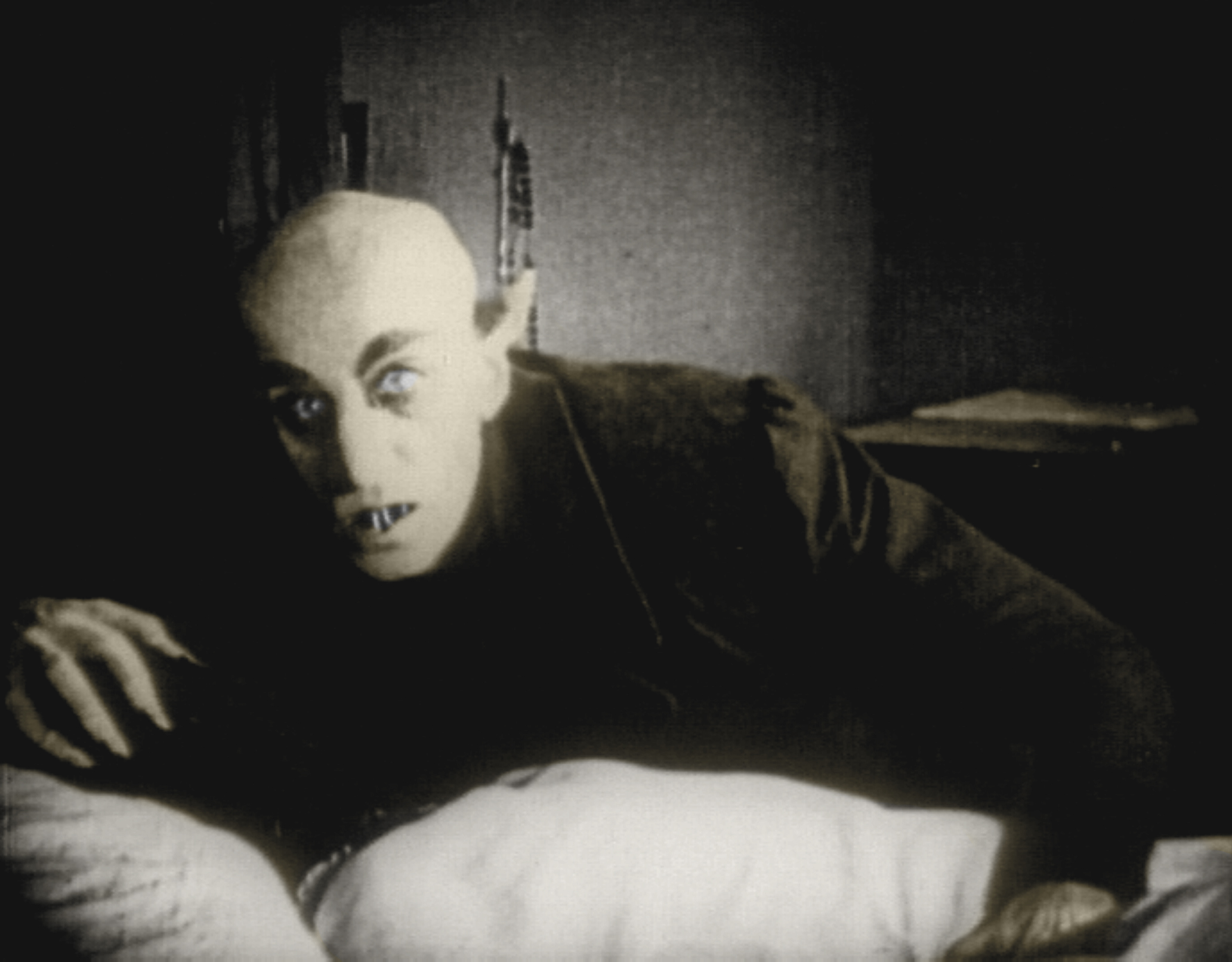
P.S.: Has anyone noticed the very vague similarity in appearance between the NBA Commish and F.W. Murnau's Nosferatu?

Commissioner Adam Silver

Nosferatu

Just kidding around, Commish.

Haith to Tulsa? • Apr 19, 2014 03:03 PM

@icthawkfan316

Ooooh, ict, that quote is a doozy, isn't it? I just saw it. I was working my way up from the bottom of the responses and got to yours after ralsters. Whew!

Good add also that you have recall of Miami fans wanting him gone; that counts in dot connecting.

Okay, my take was half baked, though in my defense I did condition it that I was not putting my seal of approval on Haith yet, only that I was trying to reopen my thinking about him and that he came from a respectable line of mentors.

But that quote!!!!!!!

Ouch!!!!!!!

Let's schedule Tulsa and beat the shizz out of them, then never schedule them again until Haith is gone!!!!

Haith to Tulsa? • Apr 19, 2014 02:55 PM

@ralster

I was hoping someone with better recollection of Haith would chime in. Thanks. I completely forgot about that no handshake line. You are right that it has to have meant something.

Maybe Self was fuming at MU, not Haith?

I agree, it seems unlikely. Self is pretty careful about coaching etiquette. If he were pissed at MU, and not Haith, he would probably not have taken it out on Haith.

So: are we to infer that Tulsa is mad at Danny and Bill for Danny for Danny leaving for a shot at a major?

Are we to infer they are hiring Haith in part as a snub of Self?

This one is very hard for me to read.

I have to think Tulsa could have found another coach as good as Haith without any of Haith's baggage.

In fact, Tulsa has had such a long record of hiring reputable guys that I figured someone like Self would had to have put in a good word for Haith for Haith to have even been considered.

How about this: maybe Self WAS just pissed at MU and now regrets having snubbed Haith, who really had nothing to do with things. Maybe Self DID put in a good word for Haith at Tulsa to make up for that disrespect of Haith and to stick it in MU's eye again!!! It is a pretty huge loss of face for MU for Haith to leave them voluntarily for a mid major, after all.

Or maybe Tulsa is just tired of coaches jumping on them and Haith promised them to stay a long time?

I am eager to hear your further thoughts and those of everyone else on this peculiar situation.

Jordan Brand Boxscore • Apr 19, 2014 02:39 PM

@ralster

Oh, my, you are getting me juiced about Alexander the Great.

Future site features • Apr 19, 2014 02:37 PM

@approxinfinity

I'm in a tough spot on all of this. I like the unchanging simplicity and elegance of the site now more than ever. I am practically ready to keep the same picture of Naismith you have picked and the same quote by him from my selfish point of view. But, at the same time, I am a believer in the need to attract new blood and note that our membership is barely expanding. I'm not hoping for massive growth, just a bigger trickle. :-)

And I'm not looking at it from a selfish point of view of wanting more readers. I'm looking at it from the point of view of a healthy site ecology wherein the trickle in covers the trickle out and the language and the thinking of the site keeps getting a steady goosing of freshness.

A bit more on the paradox I feel. I think the rising stability of the site's format, even just since season's end, has actually improved level of discourse.

On the other hand, little or no new blood concerns me a bit.

I am thinking about the new blood problem, and think it has partly to do with limited exposure off site, and with lack of sexiness in the format for younger persons.

I am an increasingly monogamous user of this site. I am increasingly detoxing from the facades of commercial sites and loving the elegance of this site. I am increasingly getting my KU basketball news here alone with just an occasional jump to ESPN.go.com's headlines, Jesse Newell's stuff, and glances at stat sites.

At the same time, we need young people, and other serious sportsmen in our current age cohort, checking us out. Among our participants, I enjoy those apparently close to my age, and learn a great deal from them, but at the same time my language and thinking about the game has probably "grown" most in breadth from coming to grips with new points of view and sensibilities of those younger or older than myself. Alas, fewer and fewer can be older. :-) This is all quite natural, too.

My point here is: this site is corner-stoned on language and so we need a steady infusion of new language and POVs to keep it vital. To do that we need to put some thought into how to add not just readers but contributors. Obviously, many of us have left the commercial forums for a variety of reasons, and, so far, no one refers to the commercial forums as having more enriching levels of discourse. At the same time, while we may never seek commercial levels of growth, we need a steady infusion of some new blood to stay vital.

Not surprisingly, commercial forums probably do not appreciate us promoting on their forums. This makes me wonder about ways to promote.

I don't really have a good idea for how to do this right now. Selfishly speaking, I don't really need for things to change. I just think that for the long term interest of the forum, some thought needs to go into figuring out how to turn the nob on the faucet to a little higher trickle, without turning it into commercial forum, which there is no need to duplicate, since there are so many of those.

Regarding updating the nodebb, or even moving to another model if it were more expedient for you; that seems imperative, even if it means losing access to our old data, sad though that would make me. I am nothing if not a legacy freak. But the plumbing has to be kept up to date for the water to run in the digital age. It is just how it is. Not to do so puts you behind an impossible eight ball of trying to keep this site up at a minimized effort to you.

Bottom line, in your role as admin, I want you to do what ever makes life least painful for you. We can all adapt to that.

Rock Chalk!

Haith to Tulsa? • Apr 19, 2014 01:59 PM

@Lulufulu85

Yeah, it was hard for me to open up my thinking about him, too. And I'm not giving him an unqualified stamp of approval yet, just saying that maybe I've been reading him wrong. Time will tell.

Haith to Tulsa? • Apr 19, 2014 01:19 PM

@icthawkfan316

Frank Haith is an interesting character I had a negative impression of because of the reports of phone issues at Miami, but only a five game ban resulted for Haith on the heels of a Miami football investigation that incidentally turned up the phone infractions by the Miami basketball program. So: when Tulsa hires Haith to replace DMan, and we know that Self probably has input with Tulsa, one has to think a bit more about Haith. Fellow coaches seem to respect him, too.

I looked at his background and it is interesting. Though born in Queens, NY, he was raised in the Carolinas. His Wiki page doesn't indicate he played college ball. He climbed up the hard way starting as an assistant at tiny Elon College, where he apparently assisted a few coaches including one William "Bill" Morningstar. I wonder if there were any connection to our Roger Morningstar's family from Illinois? Probably not. But Morningstar is a little more rare than Smith in most phone books.

Next, Haith assisted Dave Odom at Wake Forrest twice. Odom, though not a huge winner, was nevertheless successful, and widely respected among fellow coaches for reasons I have never read explained. Regardless, Odom was long known as a right way guy and has been respected. Haith was his protege from early on.

Next, Haith assisted Tony Barone, who played at Duke for the venerated Bucky Walters, in the pre Consonants era in Durham. Haith assisted Barone at Texas A&M. Barone eventually was hired by Jerry West to coach the Memphis Grizzlies for a time. Barone is not a household name in coaching, but he is apparently a respected insider in coaching.

Haith next assisted Rick Barnes at Texas and is credited with attracting quite a bit of talent to Barnes' early Texas teams. As we know, despite Barnes preference for Butcher Ball, he has over time been lumped in with the right way guys regarding cleanness of program operation.

Odom, Barone, and Barnes comprise a pretty formidable triad of mentors.

I don't recall Haith at Miami.

And while I detest all things MU, I do have to admit that Haith had that 4-guard MU club, the last season MU was in the B12, playing incredibly good basketball, and giving Self all he could handle in the move and counter move department. Frank must be a sound coach.

So: I am inclined to guess that maybe Bill Self respects Frank Haith and maybe put in a good word for him at Tulsa, when asked, once Danny moved to Wake, and Bechard was not seriously considered. And I reckon it would not have hurt a bit to have Odom, Barone and Barnes on your resume, too.

And, as I speculated earlier, an man willing to leave a major for a mid major to get out of Columbia, MO, has to have some character, right?

Go Frank, go!!!

Thanks to all for the positives. I am "playing through" myself these days, so perhaps I have an unusual amount of sympathy for these guys in this regard. :-)

@HEM: It had not occurred to me that Self might use injury in this way, but given his proven sophistication in using the media in other ways it seems possible. I will keep an eye out for it.

@Ralster: Your remark about Jam Tray is very insightful and suggests something broader to me. At certain times, Self's teams are among the most explosive I have seen, while at others they appear like duds not going off. I have tended to attribute this largely to the self-fulfilling prophecy-effect of Self going with the normal distribution assumption of human performance (i.e., 1/3 great, 1/3 average, and 1/3 awful). But your remark about Jam Tray's consistent explosiveness correlating with his robust physical constitution and infrequency of apparent injury, makes me hypothesize the following. Perhaps the wildly explosive team performances, you know, those games where everyone seems to be jumping out of the gym and doing amazing things, perhaps those performances occur when most everyone in the rotation is relatively healthy. Conversely, maybe the seeming dud games occur when 2, 3, or more rotation players are playing hobbled and the team is trying to nurse their way to a win on limited explosiveness due to a cluster of injuries. Its seems worth considering.

@JAF: thanks for sharing that quote by the NBA player; that was perfect pitch on your part.

@Wis: yeah, its not just fatigue that makes cowards of us all. injury pain does too. :-) And I've had tennis elbow twice, though never from tennis. Once after digging and planting a huge garden on California hard pan, and once from a foolish stretch of building a few pieces of large furniture and insisting on trying to do it the old fashioned way without power tools to see what it was like. Driving about three dozen screws did it. OMG was it painful! You better believe I got a shot of cortisone for that!!!! For what its worth, I had a higher pain thresh than a few, but I always remember this one friend that liked to play knock buckles with everyone he met, especially with me. He had Fred Flintstone hands. and mine were kind of bony. We would stand face to face, make fists with one of our hands, and start slowly punching them together, knuckles to knuckles, softly at first, then harder and harder, until one of us quit. It was one of the dumbest things I ever did as a kid, and I did some very dumb things in those days, but try as I might I could never outlast him. And it wasn't that he was duller than me, and so oblivious to pain and injury. He was a fabulous student and the first truly great athlete I ever knew. He could do most anything in sport. He just had a higher pain threshold than I did. On the other hand he had asthma and could not stand the heat and pollen the way I could, even though the pollen could get me pretty badly. I could always outlast him working outside in summertime. Every human being is an amazingly unique distributions of strengths and weaknesses. I believe these asymmetries underpin the efficiency and beauty of teams.

i am surprised board rats are surprised Selden played hurt most of the season, or that EJ was long hobbled by injury, and so on.

Like a good magician, I could keep my injury analysis techniques a secret. But my goal has always been to raise the level of shared basketball knowledge by transparency and good faith, in the hope that all boats rise, including mine. :-)

I never bet on games, and have not participated even in office pools for a long time. I just analyze the issue for the same as reason I analyze all other aspects of the game. I do it to get better at understanding the dynamics shaping the game I love. injury appears to me to be one of the most nonlinear impacts on a game that I can think of, because it dramatically alters how a team chooses to attack and defend another team. I think of injuries as redefinitions of opportunity sets that have direct and indirect effects on outcomes. But I am getting beyond the intended subject of simply identifying injuries.

Consider Wayne Selden. Even if Wayne had never put on the quilts, what else but chronic injury could explain the sharp decline and then nagging plateau of an exceptionally talented and reasonably skilled freshman basketball player, like Wayne Selden, but injury turned to chronic injury? Sickeness comes and goes. Affairs of the heart, and family sicknesses and losses, come and go. Bad chemistry with coaches leads to the bench, not declining productivity at things a fit player should be holding steady and/or getting better at.

I have five criteria 5 for analyzing if a player is playing with significant injury, whether for the coach, the good of the team, or out of some powerful, innate drive to perform inspire of all obstacles. I say significant injury, because in my recollection, as just a lousy high school baller, almost every player plays with some kind of minor injury almost all the time during a season of intense competition. In turn, I believe the reason some players with similar talents flourish and others lag behind is that often simply attributable to one player's ability to not be distracted by minor injury as much as another. i believe science confirms that different persons have different thresholds of pain that distract them. But I cannot site a study on it either, so take this as reputed only. Regardless, here follows jaybate's five criteria for analyzing injury.

  1. OBVIOUS IMPAIRMENT OF PHYSICAL ACTION; that's the one everyone can recognize easily. But players, especially those new to us, with high pain thresholds and lots of excess athleticism and maybe some pain killers, anti inflams, and quilts can obscure the obvious outward signs with fortitude, intense psychological blocking out of pain, compensating muscle and some legal medicinal tricks. Exceptional talents like Selden seem to fall into this category.

  2. SUDDEN, THEN RECURRING WEARING OF INJURY AIDS, ESPECIALLY COUPLED WITH OCCASIONAL CHANGES OF INJURY AIDS; these were what I playfully began calling quilts when EJ, battling through knee rehab, began wearing knee wraps with a quilt-like outer surface, instead of the more traditional looking smooth wraps. Wraps on any joint betray an attempt to compensate for injury--either a major injury, or a minor injury one is trying to keep from becoming major. The longer these wraps persist, or worse, the more these wraps evolve, the more likely it is the injury has become chronic and is worsening. Of course, the dead give away of any unstable joint is a brace of any kind. Wraps support through reducing rate of change in joint movement and by discouraging, but not entirely preventing certain directions of movement. These are for injuries where the player has not yet lost control of range of movement in a joint. Braces limit range of movement and are applied to joints that the player's muscle, tendon and ligament constellation can no longer effectively limit the adverse range of movement. After trying to understand why what seems obvious to me does not seem obvious to others, I have concluded that some are being fooled at times by players wearing two injury assists, when perhaps only one is needed. For example, a player with one mild knee injury, or hyper extended elbow, may wear wraps on both to simultaneously minimize the asymmetry of wearing one, and to camouflage from an opponent (at least in a sudden moment of action) which knee/elbow the scouting report said might be injured. Masking of weakness in all forms of competition in any setting dates at least to Sun Tzu. We should appear weak, where we are strong and strong where we are weak, chaotic where we are ordered, and ordered where we are chaotic, and so on. Also, I think some are fooled by the wearing of two wraps, one including an underlying brace and the other not. Frankly, quilts enable this. But quilts also enable all manner of possible hidden assists (e.g., topical anesthetics, topical joint warming agents, impact displacement cups, etc.) that may be used symmetrically, or asymmetrically.

  3. SIGNIFICANT DROP OFFS IN STATS ASSOCIATED WITH LIKELY REGION OF INJURY; this is one many misread. It was unmistakable that Embiid's back was still injured, even when he came back, like gang busters for a game, or two, because his blocks stat fell in half and never recovered. Embiid could amazingly still bare the pain of spin moves, but he clearly quit taking on air in ways that obviously could jar his lower back. His exceptional height and reach kept him more effective than his replacements as a rim protector, but not nearly as effective as he had been. Productivity is a hard stat for many persons analyze, because it varies some without injury. But over time, one expects to see significant improvement in weaknesses, and at least holding steady in strengths. If these are not observed in an exceptional talent, the logical first place to look for an explanation is an injury in a region likely to impair productivity in such regions.

  4. MORE JUDICIOUS USE OF ATHLETICISM THAN WOULD LOGICALLY BE EXPECTED OUTSIDE OF CRUNCH TIME; this of course usually has some autocorrelation with number 1, 2, and 3. But if 1 is not apparent, and 2 achieves successful masking, and there has not been a definitive trend line emerge in 3, then this one sometimes stands alone, especially if an injury is suspected to have occurred during the being observed. Most great athletes, even most lesser athletes at the D1, are capable of explosive impacts once or even twice on a significant injury, often late in a game, or at another decisive moment, but cannot make these explosive impacts on an intermittent game long basis, as they do when uninjured. And after performing an explosive impact, the injured player often struggles physically to get back in the action in a way he does not when not injured. This is usually an indicator that starts me wondering, even if I don't see any of the other indicators.

  5. The long term disappearance of certain magnitudes of athleticism; this is commonly called "lost pop." Its not logical to go from being a great leaper to be an average leaper indefinitely, unless injury and lesser wear and tear have combined to sap the basic elasticity of ligaments, tendons, and/or permanently hamper the function in muscle.

Finally, there are two types of injury situations one typically tries interpret.

Type 1: An injury has been announced, or a healed injury has been announced, and we are trying to decide the credibility of the extent of the injury reported, or the actual extent of the healing reported. One analyzes this, because there is a strong tactical and strategic incentive to misrepresent the extent of injury, or healing, so as to keep opponents guessing and uncertain about how much to try to exploit the injury, or to prepare for a substitute player playing substantial minutes.

Type 2: A player's injury is not yet reported; this happens frequently for a variety of reasons. Some times injuries do not seem severe enough to report. Some times injuries sharply worsen later from playing on.

There is a third type but it seems virtually impossible to analyze meaningfully. This involves the vary occasional claim that a player is injured, when he is not. Out side of noting the possibility that a coach may be trying such a tactic, I have found no meaningful way to interpret this before a game. But it occurs rarely and opposing coaches seem to prepare the same regardless, so I don't give it much consideration.

Finally, in using these criteria and typologies, I never think in terms of certainties, only probabilities. I suppose this is why so many dismiss it as "always speculating." But how could one do more, when it is known that coaches do not always reliably report injury, or the extent of injury, for whatever reason they may have. Further, there are many, many minor injuries to each player all season long that can be mistaken in the short term for something more significant, for an enduring injury. At times the probability can appear very high of a significant injury, but there are always other possible variables that can either explain, or combine with, an injury to explain the nature of a changing performance phenomenon.

Regardless, this is what I am thinking about and analyzing when I am "always speculating about" quilts. :-)

Why coaches and players risk playing with injuries, and whether they should, is another vastly more complicated series of post I am probably not qualified to write. For now suffice it to say, that there appear to be many reasons and the most obvious one is that in the case of truly exceptional players, such incredibly gifted players can often play injured at higher levels than their backups, and with the pressure to win, many are encouraged to "play through" for "the good of the team."

And yes, I have guessed wrong a few times (probably more than a few times), but I perhaps I have also been right a few times, when confirmation never came about, so that I could take credit for it. :-) That appears not really a knock on analytical technique performed without access to insider knowledge. That is just the nature of engaging in probabilistic analysis. Even the best analytical tools yield wrong answers some of the time due to insufficient data. The question is: do they yield more useful insights than doing not doing the analysis. They do for me, but I can't speak for others.

Rock Chalk!

Haith to Tulsa? • Apr 18, 2014 01:43 PM

@VailHawk

I don't believe you were polite to Norm for a second, Vail. Laird Noller? Of course. But, Norm and an MU alum? No way. Its not in you.

Haith to Tulsa? • Apr 17, 2014 11:27 PM

Hypothetical Speculation: what if MU had something serious on Haith? Might they have told him to go find another job in exchange for not having to wreck him to avoid paying him off after a firing? No, even MU, aka the University of No Bottom to Down, wouldn't stoop that low. That attributes too much shrewdness and cunning to a school symbolized perfectly by columns with no building. I still think columns with no building capture MU PERFECTLY--the facade with nothing behind it--the sports program with no substance. I guess MU would be a hellish place to coach, but willingly leaving a major for a mid major seems unlikely without some kind of MU mendacity driving it. MU appears down right pathetic, doesn't it? What's next? The SEC kicks MU out and replaces them with University of Phoenix, while MU joins a juco conference? Which was dumber? MU leaving the B12 for a smaller revenue share, or the SEC taking on the championship-free, canker sore of college sports? Make it stop MU, make it stop. Buy Pinkel a breathalyzer. Declare moral bankruptcy. Reorganize as a meth research institute. Get out of college basketball. Next.

(Note: All fiction. No malice. Just ridicule.)

p.s.: Haith may not be such a bad guy after all, if he is willing to leave MU for a mid major; that takes some character.

Post Banquet Conversation • Apr 17, 2014 02:21 PM

@konkeyDong

Don't want to bore you with this concept of networks/internets as a model for thinking about offensive basketball (or defensive basketball, too, or offense/defense/transition jointly), but you seem someone that might be able to think creatively and effectively about the idea in your spare time sometime down the road if the spirit were to move you. So: in case you missed my short response to you yesterday on the embryonic idea, here is another link. I think I've lost too much off my fastball to do the concept justice, so I am recruiting you and anyone else here to take the idea and think more about it. KU Basketball has from its inception always been a hotbed of innovative thinking about the game. There is no reason KUBuckets cannot contribute to KU Basketball remotely. :-)

/topic/940

April Texas Hold'em Flop • Apr 17, 2014 02:08 PM

@nuleafjhawk

Great license plate, too. :-)

Post Banquet Conversation • Apr 17, 2014 01:23 PM

@REHawk

As you well know, Coach, there's no one on here I respect more than you on all aspects of basketball. You have done it. If you think he should transfer, then I think he should transfer. I am dumb, but not stupid.

Your self-adopted player and on your pine for life,
jaybate 1.0

Post Banquet Conversation • Apr 16, 2014 09:03 PM

@icthawkfan316

Selden, barring injury, and assuming Selden's knee is what soured his trey percentage, is going to be the great player of next year's team. Wayne not only has talent, he seems to have "presence." This presence should find its own level next season without Wigs around doing freakishly athletic things.

Post Banquet Conversation • Apr 16, 2014 09:00 PM

@konkeyDong

It is concerning. But I suspect Selden is going to get Hudy's version of Jenny Craig. He is going to be leaned up. Maybe even weigh 5-10 pounds less. Lessening Selden's load would be the best medicine for Selden's knees, and for quickening his first step. And as any professional cyclist will tell you, the less weight you have to pull, around the more energy have available to expend on getting ahead. Wayne is big boned, as they say, and so making him a lean, mean fighting machine is not going to make him any less capable of bang ball when needed.

Post Banquet Conversation • Apr 16, 2014 08:40 PM

@KansasComet

Thx, Comet. Hope you are going somewhere you enjoy immensely. Overseas travel always gives my life force a reboot. Makes me appreciate the world overseas more, and then makes me appreciate the States even more. I know some like to wait and talk about their travels afterwards, but if you can stand to, send us updates on the great new finds you make over seas.

Post Banquet Conversation • Apr 16, 2014 06:40 PM

(Warning: this post includes a long set up, and followed by unbridled optimism and belief in two players that many have grave doubts about. Be it known I hate giving up on guys that don't give up. Sometimes it leaves me out in right field, as it did when I hoped for Justin Wesley to surprise everyone and make an impact. I can own it as one of my flaws. I love underdogs. America is just an underdog that got off the leash. I love America, too. The hell with leashes.)

It appears to me that we have never gotten the straight skinny on AW3's situation.

And we may never get it.

But that's alright.

We never REALLY got the straight scoop on Russell Robinson's year in the darkest, sensory deprivation depths of the Toughening Box.

Still, I think it helps to try to recall the crucible that AW3 has been through--to not simply leap to the conclusion that he will be one of the guys that never made it.

Self has a history of putting certain players through living hell; of ignoring them to the edge of oblivion, and then retrieving them to do great things. Not all players have fairy tale book endings, but more wind up contributing something important to the program than don't.

Most of the guys that have left the last few years, had they had the courage to stick it out, would have be utilized by Self their last years. Justin Wesley is about the only one that did not contribute something decisive his last season and even he got one or two chances to come in an make an impact late. But Wesley clearly earned Self's respect by hanging in and be an L&A practice player. Not saying that's enough. Not saying it wouldn't hurt like hell to get caught in the numbers. But I am saying that a surprising number of guys with a particularly marketable skill, like guarding the post, or rebounding, or slashing, or trifectating, eventually are called upon under Self their junior and/or senior years.

So let us dust off the cobwebs in the memory.

Partial recall then from the Memory Hole about AW3:

Self said before the start of AW's first season that it was pretty special to have a guy his size that could shoot the trey. AW3 was supposedly an awesome machine of a trey shooter.

Next, as a freshman, when he got in games he seemed a bit awkward from being a bit too skinny and we never saw much sign of the great trey stroke.

Sometime during the first half of the freshman season it surfaced in some newspaper quotes that his father indicated that KU was not the only team that had wanted his son. Whether or not the report meant to, it seemed to me the remark of a parent possibly disgruntled with his son's PT. AW3's PT seemed to drop somewhat after that quote appeared, but it was hard to draw any strong connection.

Recall, however, that AW3's situation was also unfolding somewhat in the shadow of the then modestly curious lengthening absence of Zach Peters, which Self remarked on intermittently more or less to the extent of saying that the longer Zach was out, the tougher it was going to be for him to come back.

Sometime later in that first semester, if I recall correctly, it was reported that Zach reputedly suffered from a number of concussions, some dating back to high school football, one to some time during the summer in Lawrence, and maybe one more during the season. Don't hold me to this sequence exactly. Its kind of vague in my memory.

Soon it was reported that Zach had suffered from persistent impairment from the concussions, would not be returning to the team, would be going home at semester, would stay in school until then, and that Zach's roommate, AW3, would be switched with Tyler Self for the remainder of the semester. I do not recall an explanation being given for the roommate switch.

Over the rest of the season, AW3 got a few chances on the floor, did not play badly, showed some unexpected aptitude for rebounding, but did shoot particularly well, nor impact much, and maybe struggled a bit with defense and protection, as most freshmen tend to.

Suggesting Self saw a possible specialist role for AW3, Self inserted AW3 at least once at the 4, against a small ball team (I forget which one). It was a brief trial and did not seem to accomplish much, but suggested also that AW3 was perhaps picking up defending some as the season went on.

AW3's PT seemed to dwindle down the stretch, as Self shortened his bench, and Ben at 2 and Travis at 3 played and trifectated exceptionally well and proved to be iron men in terms of endurance.

After the season, AW3 made clear he was staying and committed to earning a rotation spot, despite the signing of Selden , at 2, and Wiggins, a 3--AW3's most likely positions.

Prior to last season, Self praised AW3's off season development, indicated he was a likely rotation player, and said that he was being a leader on the very experienced young squad.

At the start of the season, AW3 seemed transmogrified by Hudy's weight work. The skinny gangly freshman had turned into a hulking, cut sophomore. He seemed to move much better. He saw some PT early but did not shoot the trey ball very well. Ball handling skills did not look exceptional, but they also did not look horrible either.

Shortly, he started getting almost no playing time, despite the other starters and reserves on the perimeter protecting and shooting the trey ball often poorly. His defense seemed a bit slow footed, he did not seem sharply worse than anyone else backing up Selden and Wiggins, and at times did not seem sharply worse than Selden and Wiggins, during their ups and downs early.

Very early and conspicuously, Self started Frank Mason at the point, which seemed a wake up call to Naadir Tharpe. But which we now know may have been something of a cover story for preparing to compensate for Selden's knee injury.

While we know now that Selden never fully healed, we know Selden resumed playing more.

Around this time I vaguely recall there was a reputed injury to AW3, maybe a hip.

In turn, the experiment of Mason starting, while junked after only two games, was not tossed in the ash can entirely. Recall that Self increasingly tended to pull Selden for a rest, move the 38% trey shooting Tharpe to a wing, and Mason to the point. It was during this period that Mason was being inserted reputedly for his ball handling and get-to-the-paint abilities, while Tharpe was reputedly being used as a trifetate and team leader ahead of AW3.

The inference available at the time was that AW3 was slow to heal and in any case was not a good enough ball handler to share Tharpe's ball handling duties, made apparently necessary by Tharpe's on again, off again abilities to handle the ball against pressure.

Self then spent some time rotating Mason and Frankamp into games ahead, while AW3 sat.

Shortly, Frankamp got a knee injury.

It was at this time that AW3's PT seemed likely to rise, but did not.

Self stuck with a three guard rotation of Tharpe, Selden, and Mason, despite all three struggling during this period.

Some point after this AW3 was asked by a media person about his status and indicated some thing to the effect that it would not be fair to the team for him to discuss transferring until after the season. From that moment on, at least as far as I can recall, AW3 more or less never got another serious look, and was largely only inserted near the end of a half, or just before a TV time out, to make sure a rotation player did not pick up a foul.

Asked by media again about his status later in the season, again if I recall correctly, he seemed more circumspect, indicating only something to the effect that he was just working hard and trying to stay ready in case Coach Self ever called on him.

Starting this off season, I do not recall any comments by Self about AW3, though I have been somewhat less vigilant in reading about the Hawks the last few weeks. Further, speculation among board rats swirls that center Myles Turner and PG Devonte Gregory signing with KU would require someone to transfer in order to have enough scholarships for just those two. Yet there has been nary a peep from AW3, or from Self, that I recall regarding this situation.

Silence can be deafening, or mean nothing at all.

It could be an announcement of AW3 transferring is contingent on signing both those players.

It could mean that someone on the team could give up a scholarship; that has occurred infrequently in the past.

I have a hunch Turner goes to UT and AW3 stays and surprisingly to some gets some rotation time, if Gregory is signed.

Why?

Whether some like the caliber of our returning bigs, there are four of them plus an OAD recruit: Traylor, Ellis, Lucas, Mickelson and Alexander. That is a lot of bodies to wade through. Texas has two very good ones, but only 3 total to wade through, if I recall correctly. And the second season of his likely TAD experience wherever he goes, would, at UT, be pretty well centered on Turner. Turners's problem at KU is that there is a significant probability that Self could sign another OAD big next season and Turner could experience what Tarik Black experienced this season. So: I see Turner going to UT.

But why would that make AW3 a possible rotation player after having been buried so deeply as to be on the verge of being forced into a transfer?

Self was forced to play non combo's last season, because he needed a ball handler in the games at all time to compensate for Tharpe vulnerability to Pressure Syndrome on both ends of the floor. That was necessary, because Mason and Frankamp, Self's only alternatives to Tharpe, were green wood moved from HS 2 guards to D1 PGs. Well, I'm here to disabuse everyone of the notion that it is impossible for a HS 2 to become a D1 PG. It is possible. It just takes about 2-3 years.

Mason is right at the threshold of being a super, short, X-axis PG. There is absolutely nothing about his game that cannot be fixed over a summer of physical/mental maturity and a lot of hard work and tireless reps. And it is clear that Frank Mason understands he is Rocky getting his big shot against all of the Apollo Creeds of the world. Frank may not have been as quick of a study as everyone hoped for (couldn't switch from hyperdrive to dish, couldn't learn when to trigger and not), but intermittently all season long he made afterburner moves not even Tyshawn Taylor had the speed to make, and Tyshawn was lightening his first season too. XTReme agile, quick-footed hyper speed is worth developing, even if it takes till a third season of trying to get it all down, as it took Tyshawn to get to it down. Speed kills. Frank has enough speed to be a mass murderer on wood. He just needs a lot more work on his off hand. He only had one had up to the challenge of enabling his speed. Off hands can be developed as surely as The Twins could learn to jump, and Mario could learn to shoot 40% from trey. Frank just needs to work and work and work at that off hand. He needs to tie his good hand behind his back for the rest of this off season. He needs to eat with it. Type with it. Shoot with it. Fly fish with it. Spin cast with it. Oil paint with it. Dance with it. Write with it. Fly kites with it. Play piano with it. Fence with it. Autoeroticize with it. And then when September gets here, he needs to untie his on-arm and he needs to be running 400 drives a day to the iron with two trainers, or coaches, or cheerleaders, standing there with 10 foot tall plywood cutouts of big men on rollers that he has to drive at and react to in mid air to these moving big men cutouts and dish 200 times right and 200 times left into trash barrels. And every time he misses the trash barrel he has to add one rep. If he does what I am saying, no one on Planet Earth will be able to stop Frank Mason next season with anything but a sniper rifle. Most point guards are born, but Tyshawn Taylor proved some point guards are made. Frank Mason has the compactness that slayr said Tyshawn lacked. Frank Mason was put on this earth to be the embodiment of the X-axis game that slayr has explained to everyone that would read.

But I have digressed on Frank in pursuit of explaining why AW3 might see rotation time.

Frank is not alone in the getting better department. Conner Frankamp already showed that he could play the position adequately from a protection, dribbling, and shooting standpoint the last few games. Conner has to build up his fast twitch, as slayr has rightly pointed out. HE WILL. He has excellent hops. He is a brainwashed, monomaniacal, gym rat, coach's son. He will be able to get in the paint this season some, not enough for him to be the only PG, but enough to keep the pressure on opposing defenses, when asked.

Next, Devonte Gregory is as good as signed. Gregory is a born point guard, even if he is not recognized as a great one. Born point guard. Ready to plug and play, just not able to put the team on his back. Fine. We have other players with backs ready to carry the team.

The above means that Self is going to have THREE guys ready to run the point full time by mid season. Three guys that won't have to have another big time ball handler at the 2 every minute, like a baby needs a pacifier.

This means Selden, with a good knee, ought to be able to become the create a space and drain it inside/outside scorer that Self expected.

And Oubre can be somewhat the same at the 3, if he gets his trey gun sighted.

Now Selden and Oubre are going to need to sit 10 minutes each per game; that's 20 minutes of backup PT.

And neither wing position is going to need a pacifier replacement.

So: if AW3, can get his trey gun sighted, and maybe drop 5 pounds to lean up a little for guarding under the new rules, AW3 looks like a perfect fit for that 20 minutes, whenever the other team is long at 2 and 3, and 10 minutes when they are only long at the 3.

I almost hope Turner doesn't come. I want AW3 to get his time in the sun. Self put him into as long of a toughening box sentence for whatever reason, as he put RR in. By god, AW3 needs to be set free. This is the flipping "Bridge Over the River Kaw"!!!!!!! How hard do you think AW3 will play when Self finally unleashes him? What loose ball won't he dive for? What charge won't he take? What forearm smash won't he deliver? What trey won't he drain?

In an age of soft OADs, AW3's body and mind are hardened. Let him study Travis Releford's game.

Go AW3, Go!!!!!!

P.S.: Oooooops! I forgot all about Brannen Greene standing in the way of AW3 at the 2 and about Self trying Brannen a bit at the 4 last season, also. Well, that happens sometimes, when you post from emotion. :-)

Hmmmmm, I don't want to pull against Brannnen. And I don't want to give up on AW3. I guess it will be some tough sledding for AW3 given that Brannen beat him out of minutes at the 2-3 in Brannen's first season. Oh, well, it may come down to a slot behind Oubre for AW3 and only 10 mpg best case. But that would be start on the long road out of the toughening box.

April Texas Hold'em Flop • Apr 16, 2014 09:57 AM

Heckuva piece of writing, slayr!

Myles ought to come, but the Karviar Shepherd should have, too. Something happens to a lot of these big men down the stretch of their recruiting. You make clear: they should all be picking KU.

Post Banquet Conversation • Apr 16, 2014 09:24 AM

@icthawkfan316

Thanks for the summary. I missed the story. If Selden's knee heels, and his pop restores, LOOK OUT!

Selden has joined the ranks of the ABSOLUTE MEN! These ranks include: Kaun, Rush, Collins, Reed, Selby, EJ, and Travis that we know of.

ABSOLUTE MEN!

I am against guys playing with these injuries, but I am in awe of them being able to.

These guys are an amazing group of human beings.

Next, here is my "I have a basketball dream" speech.

Selden finds his 40% trey.

CF finds his 45% trey.

Oubre works all summer on his trey and shoots 38% from trey.

AW3 enters rotation and finds his 40% trey.

Perry expands his 40% trey.

Mason finds his 38% trey.

Naa recovers his dignity and transcends his loss and finds his 40% trey.

Mickelson finds a 40% trey top of FT circle.

Jam Tray, Alexander, Hunter and Lucas stick every miss back.

Ring!

@konkeyDong

(Note: reposting this from a thread on PGs.)

Thanks for commenting on my analogy of client/server vs. multinodal internet, for thinking about offenses. At first, I just thought about it as a metaphor, but the more I think about it the more I think computer networks may actually be a good model for thinking strategically, tactically and operationally about offensive basketball.

In all networks you are looking at bit flow rates of the system. About certain subsets of the network using certain amounts of resources and other parts of the network using other amounts of resources and about varying loading.

Then there are the concepts of distributive computing and parallel processing that might be robust concepts for thought about offensive basketball.

Offensive basketball, especially the way Self plays it, is about optimally redistributing system resources as the opponent "adjusts" to what is being done; i.e., as the opponent varies available bandwidth for one player (i.e., one node) and so gives greater band width to another and so on.

I haven't really thought this through much beyond what I am relating here, but if offensive basketball were thought about in this way different kinds of statistics might begin to be measured that better capture team's abilities to redistribute their team resources to meet adjustments, and differing types of opponents, and so coaches might begin to think more systematically about how to make the tweaks to enable the redistributions, and might think more systematically about the kinds of skill sets a player has and how they mesh (or fail to) with other nodes (players).

I know this may sound bizarre to many, but I have a hunch that a basketball team modeled this way could then be subjected to a modified finite element analysis that would find the weak and strong dynamical links among the multimodal system that is a basketball team.

Likewise, a defensive coach could look at the same offensive statistics, especially strong and weak dynamic linkages among the nodes/players and find weak points to attack.

Imagine being able to do what I am conceptualizing here and plug in various recruits in a simulation to see which one produces more net benefit and which recruit produces less as preparation to decide which prospect to sign.

Great coaches probably do a lot of this by "feel" and heuristics developed through years of experience, just as great engineers and designers used to be able to build great cars, or trucks, or planes, before computer modeling. And the feel and heuristics are still important to engineering and design. But computerized simulations allow testing of ideas and exploration of systems to find points that can be altered to optimize the system.

I have a hunch that right now this could be done.

PG options • Apr 16, 2014 01:42 AM

@konkeyDong

Thanks for commenting on my analogy of client/server vs. multinodal internet. At first, I just thought about it as a metaphor, but the more I think about it the more I think computer networks may actually be a good model for thinking strategically, tactically and operationally about offensive basketball.

In all networks you are looking a bit flow rates of the system. About certain subsets of the network using certain amounts of resources and other parts of the network using other amounts of resources and about varying loading.

Then there are the concepts of distributive computing and parallel processing that might be robust concepts for thought about offensive basketball.

Offensive basketball, especially the way Self plays it, is about optimally redistributing system resources as the opponent "adjusts" to what is being done; i.e., as the opponent varies available bandwidth for one player (i.e., one node) and so gives greater band width to another and so on.

I haven't really thought this through much beyond what I am relating here, but if offensive basketball were thought about in this way different kinds of statistics might begin to be measured that better capture team's abilities to redistribute their team resources to meet adjustments, and differing types of opponents, and so coaches might begin to think more systematically about how to make the tweaks to enable the redistributions, and might think more systematically about the kinds of skill sets a player has and how they mesh (or fail to) with other nodes (players).

I know this may sound bizarre to many, but I have a hunch that a basketball team modeled this way could then be subjected to a modified finite element analysis that would find the weak and strong dynamical links among the multimodal system that is a basketball team.

Likewise, a defensive coach could look at the same offensive statistics, especially strong and weak dynamic linkages among the nodes/players and find weak points to attack.

Imagine being able to do what I am conceptualizing here and plug in various recruits in a simulation to see which one produces more net benefit and which recruit produces less as preparation to decide which prospect to sign.

Great coaches probably do a lot of this by "feel" and heuristics developed through years of experience, just as great engineers and designers used to be able to build great cars, or trucks, or planes, before computer modeling. And the feel and heuristics are still important to engineering and design. But computerized simulations allow testing of ideas and exploration of systems to find points that can be altered to optimize the system.

I have a hunch that right now this could be done.

Just Say No To OADs At KU • Apr 16, 2014 12:25 AM

@drgnslayr

First, I agree than an exceptionally good PG is imperative to winning rings and you have to sign one, whether it is for one year, or for several.

Shabazz Napier was the poster child for the kind of guard you need to win a ring. High foundation. Exactly the kind of game you have described as crucial for a team. I agree.

Further, Shabazz Napier was the perfect fit for that UConn team, just as X Henry was a very good fit for the KU team he played for. But UConn had 4-5 other experienced nonOADs that could and did effectively guard what many have argued was a UK team stacked with the most talent since the Wooden years. And they out guarded UK both in the early transition game and later, when Cal borrowed a page from Self and told his OADs to play grind-it-out. That tells me that 5-8 OADs, even some coming back for a TAD, are no match for a seasoned team with some depth and an OAD PG ready to run the team out of the box (i.e., with a high foundation, not just a high ceiling).

I have't studied UConn closely, but it seems likely UConn would have gotten to the tournament with an average guard and without Napier, just as KU got to the tournament in '13 and '14 without a good point guard like Napier. But like KU in those years, this year's UConn would have fizzled early without a good PG, like Napier.

At the same time, I really think that to get a ring with Napier he had to be with an experienced, hard nosed bunch of very athletic guys to win a ring, or else he had to be paired with stud OADs like Anthony Davis and Kidd-Kilchrist. This UK team lacked those kinds of guys. Randle turned out to be a lot like Thomas Robinson. He was an exceptional player that desperately needed a rim protector to make him be at his best. He just was not quite good enough to rim protect, rebound AND score in the way a great center can carry a team doing those things. Randle was a wonderful stretch 4. But not a guy that could carry a team against an exceptionally hard nosed and experienced bunch of defenders like UConn.

Further, swap those Twins out and swap Napier into UK's other cast, and I think Napier would have had a tough time guiding UK to a ring this season, the same as those Twins at guard for UK did. UK had all the OADs but it didn't have all the pieces without Caulley Stein. Napier would have needed Caulley-Stein to get them over the top too. Would he have done a better job than the Twins? Yes, because he is the real deal as a point guard and those Twins were not. You and I agree some on this. I am kind of a hybrid of you and ralster on this point. I want it both ways, like KU had it in '08. I want the exceptional point guard that Sherron was, plus I want the two combos that Chalmers and RR were. I want both. Or at the least, I want Marcus Teague and Doron Lamb.

But regardless of what I want, it is a very tough life for a freshman point guard, no matter how good he is, playing with inexperienced players that don't have time to learn a diverse system and don't really have time to become battle hardened and learn how to play under conditions of total war with everything on the line.

In this debate, I am always drawn back to the KU team with TT, TRob, as its stars, and Withey, EJ and Travis as its no names. They got back in the game the second half, and they did this with almost no depth, and with Travis AND EJ on bum wheels. Think about that, slayr. A no-depth team without any Micky Ds, much less any OADs, stayed in a game even though two starters played on a knee that needed an operation and an ankle in a boot. Logic tells me that KU might have beaten UK's 6 OADs with two more good wheels and one or two depth guys. I mean it was just sick the way Withey shut Davis down to 1-10. And, again, imagine the way we would have locked the entire UK team down had EJ's knee been sound and Travis ankle been sound.

The more time passes, the more I think OADs are mostly (though not always) high ceiling guys with low foundations that fold when the going gets tough against seasoned teams at full strength. Some seasoned players fold too. Its part of the game. But I think increasingly we are seeing that regardless of how they call the game, a hard nosed, seasoned team with 2-3 40% trey shooters plus a very good point guard is the recipe for success.

Frankly, the only reason Wisconsin did not win it all was their PG was just not quite good enough. Good lord, if Napier had been on Wisconsin this season, Wisconsin would probably have gone undefeated and won the ring.

All the above being said, there is one politically incorrect reason to sign a bunch of OADs. This year's tournament made it appear that OADs get tremendous advantage in the foul calls the first two rounds of the tournament at least. And Wisconsin had to beat Arizona twice to win the game. That appeared one of the most stark attempts to give a Hi-Viz Talent laden team a victory. But there were many others IMHO.

(Note: it was perhaps a testament to Stumpy Miller's apparent limitations as a coach that even with the apparent gift of a five minute rest period from referees reviewing a call that apparently should never have been reviewed in the first place, that Stumpy could not find a winning play. Seriously, if Nike were not appearing to stack Stumpy's team for him, how would he even be getting in the tournament? But I digress.)

Heck, I thought Andrew Wiggins got a sweet whistle most of the season. And once Joel Embiid became considered a lottery pick he went from being a human punching bag that got away with nothing to a guy still getting roughed up that could apparently get some sweet whistles himself. Xavier even appeared to a sweet whistle IMHO.

You apparently have to have real stars on your team--the kind that can sustain the ratings--to make the refs appear to want to keep such stars in the games. So there is something to be said for carrying an OAD just for the sweet whistle effect.

But carry very many of them and it turns your team into a revolving door and frequent turnover means long stretches of seasons where not enough guys appear to play hard nosed enough to be a serious team in the madness.

I just reread the above and want to make clear that I don't think all OADs coast. I believe they appear not to grasp just how hard seasoned D1 players play after a few years playing at D1 intensity. It appears a very big jump in intensity and contact to D1 no matter how much talent an OAD has, just as it appears a jump to the NBA. It would seem unusual to find 5-6 OADS all capable of playing at a D1 championship level of intensity and contact. And in fact Cal has only won one ring with the formula. Cal's formula can win a lot of games, but so can Self's. It can get you to a lot of Final Fours, but so could Ben Howland's formula. I am just saying the verdict is not yet in on the efficacy of going heavy on the OADs to win RINGS.

What the verdict does seem to be in on is that if one loads up on OADs one tends to avoid falling to .500, and coaches seem more averse to falling to .500 than to failing to win rings, particularly after they already have a ring on their finger.

Rock Chalk!

Just Say No To OADs At KU • Apr 15, 2014 09:57 PM

"All politics are local."--the late Speaker of the House Tip O'Neill

"All strategy and tactics hinge on logistics."
--anonymous

"Rule: All recruiting decisions are situational.
Corollary 1: Recruit everyone that might fit the situation.
Corollary 2: Sign the player that offers the best trade-offs for the situation.
Caveat: Make sure you understand the situation and guess right on the trade-offs."
--jaybate 1.0

First, every fiber of my being wants to jump on board with HEM and say, "Yeah, what he said!"

And I am close to his elegantly propositioned post in POV.

But I have to diverge just a bit. I have to leave a little crack in the door. I have to twist the blinds open just a hair.

The simplest rule should be: never sign an OAD unless the alternative is likely to be worse.

This past season Self seemed to have an inside, lower level single on the Carnival Line SS .500, or worse, if he did not pounce on the chance to join the OAD Premier Club in hopes of getting assigned a swank state room.

It did not appear, and after the season still does not appear, that either returning players, or other incomings, could have filled the PT slots as well as the OADs, who IMHO, left a lot to be desired as D1 starters for much of the season. I don't really think the returners, or the incomings, could have done better than Wigs and Selden and Embiid, though it may have been close at certain times of the season.

Where I sing in HEM"s choir is as follows. Other teams seem to get it done sometimes without them. Other teams, UK aside, are not ringing up the rings with OADs. OADs wreck continuity and take a long time to jell, if they ever do. Finally, OADs create instant need as well as instant fulfillment. Need is the hangover that comes with the cocktail called OAD.

In team building--recruiting especially--need that can be fulfilled is good. Need that cannot be fulfilled is bad. Its worse than bad. Its real bad. Epic bad. Evil bad. Godzilla bad.

To steal HEM's pill device, OAD Need Fulfilled is a grey pill that guaranties you win some, and have more need very soon. OAD Need Unfulfilled is a brown pill that guaranties you dirty your drawers. Multiple OAD Need Unfulfilled is a Black Pill filled with cyanide that guaranties your next season craters like a neighborhood caving in from fracking.

So: I have taken the liberty of reducing OAD recruiting to Boolean Logic.

100: If OAD has high ceiling, say "who gives a flip?" then go to Line 110.

110: If OAD has high foundation, then sign and start recruiting, else go to Line 120.

120: If OAD has low foundation and you have a hole a returning, or incoming player, cannot fill, then sign, else go to Line 130.

130: If OAD has low foundation, and you have a returning, or incoming, player that can do about as well, then do not sign and STOP.

Consensus OADs leave holes that have to be filled instantly.

Consensus OADs have little incentive to play balls to the wall, except situationally, when it serves their marketing needs.

Consensus OADs don't seem any more prepared for D1 speed and violence than any other type of player, though when they adapt to it by mid season, they are apt to be better than a lesser incoming player.

Consensus OADs have little incentive to challenge defenders at the rim, where injury risk is high.

We saw what Wigs and Selden could do at crunch time against Stanford with their level of experience.

We also got a taste of how long it took for low-foundationed types like Wigs and Selden to even get comfortable with D1 speed and D1 violence--fully 1/2 of a season.

There are very, very, very, very, very, very, very, very, very, very, very, very, very, very, very, very, very, very, very, very, very, very, very, very, very, very, very, very, very, very, very, very, very, very, very, very few OADs that can enter and carry a team on their backs.

The only ones that I can think of off hand were Anthony Davis and briefly Joel Embiid They were rim protecting athletic freaks in the post.

Inference: Never, ever, ever, ever, ever, ever, ever, ever, ever, ever, ever, ever, ever, ever, ever, ever, ever, ever, ever, ever, ever, ever, ever, ever, ever, ever, ever, ever, ever, ever, ever, ever, ever, ever, ever, ever, ever, ever, ever, ever, ever sign a guard, or perimeter player thinking that the team can be put on his back.

Ain't gonna happen. Not now. Not in the future. Not in the past. Even the Shabazz Napier's and the Derek Roses didn't carry the teams on their backs. They had seasoned teams that they were plugged into and just had to do their things at the point.

I guess the way I would articulate HEM's otherwise solid case is: Coach Self, for god's sakes, try your damnedest to avoid OADs, and sign only those with high foundations, and never expect them to carry a team on their backs, unless, unless, unless...the alternative would be worse.

And yet the bottom line on recruiting is that you have to recruit everyone to have chance at optimizing who you do sign for any given situation that comes up.

Recruiting is a numbers game if ever there were one. You have to recruit the best to have a chance to decline to sign them when it comes time to assessing the situation.

So: in the end, I reckon Self is doing it about the right way.

Perhaps Self's greatest strength is his ability to make the best of difficult situations.

Recruiting, signing and fitting material to optimize a team, given losses to other coaches in recruiting, flame outs in guys recruited, and so on, mean a coach has to throw a really wide net just to get to the point of having enough players interested in coming that he can then afford to select the ones that fit the need of the situation best.

PG options • Apr 14, 2014 09:25 AM

Been on a CIVIL WAR road trip through PA, Maryland, VA, WV and Ohio and came back to this thread and really enjoyed it.

Only add is conceptualization. The thread lays out a full spectrum of PG philosophies and the differences appear to track with a strategic spectrum of team play with two poles/paradigm (P1 and P2) and a third paradigm/tendency in the middle (P3).

P1 is a PG centric paradigm where the offense originates at PG and the PG moves down a tree diagram of cascading options. Think of PG as a server and 4 client computer network. The action in the network keeps circulating through a server. This would be the the classic do everything, run everything point guard in an offensive scheme enabling that sort of play. The purest, most abstract form of this was Phil Ford running the Four Corners for Dean Smith. Slayr, HEM, Ict, and konkey seem to be posting in varying degrees toward this pole of the spectrum, though not at the Four Corners XTReme.

P2 is the opposite pole. It is a 5 node internet model in which the point guard exists not a a server but as one node in a network. The point guard Initiates network function most of the time, but point guard function is then quickly distributed among several nodes. A purely abstract example would be a 5 guard offense. No one so far is posting, or coaching, at this extreme though a team like EKU approaches it. Fred Hoiberg has approached it at times perhaps. John Wooden's first two ring teams approached it playing a high post with 5 starters under 6-5.

P3 is two networks linked, or two internets linked. The perimeter network has point guard and two wings. A point guard initiates and can act as a server with two clients, or as one node in a three node internet in which point guard function is highly distributed among two or three combo guards in the three node internet. An example of the latter would be Self's '08 ring team, when Chalmers, RR, and Sherron were in--two wing points and a point point, if you will. The parallel network, internet, would be the two bigs.

I am not going to argue one strategic paradigm is intrinsically superior. Superiority depends on opponent and context. What one can say is that internets tend to have more "survivability" than networks. And networks can be more dedicated a fine tuned to certain tasks.

Caliparis book and change of ncaa rules • Apr 12, 2014 12:28 AM

Guys that try the pros but don't cut it ought to be able to come back to college ball if they are 21 or under.

Embiid Did The Right Thing • Apr 10, 2014 08:13 PM

Don't worry about the jersey raising.

If KU participates extensively in the OAD phenomenon, or even if not, but Joel becomes one of the five greatest centers of all time in the NBA, KU will find a work around.

If the OAD phenomenon endures, the standards for admission will be changed to enable the school to have the great, short times jerseys hanging.

Count on it.

What is a Blue Blood? • Apr 10, 2014 08:04 PM

@justanotherfan

Have you considered weighting this dominance index for infractions weighted by number and severity? I would kind of like to know how much dominance is achieved by committing more severe infractions and less severe infractions, and by frequency of committing infractions.

Again, I would exclude conference titles and all levels of finish in conference to avoid double counting such things.

The tournament seeding is a composite variable for conference finish, SOS, and so on.

What is a Blue Blood? • Apr 10, 2014 04:00 PM

@justanotherfan

From a purely QA point of view, conference titles should probably not be counted at all. The rank order of performance in conference is by definition built into the seedings of the NCAA tournament, regardless of what place a team finishes it's conference. The only reason to try to win a conference title, is to get a one seed. The only reason to try to finish second, or to win a conference tournament, is to get a two seed, and so on. Tournament seeding, despite it's flaws, combined with tournament performance, probably constitute the best global indicators of dominance available. Combine them with a winning margin statistic in the tournament and one will have a fairly reliable and robust rank order of dominance each season, and for periods of years. Whatever approach is used, double counting effects of dominance should be minimized.

Is Roy On the Hot Seat? • Apr 10, 2014 04:11 AM

I wish he would hurry up and retire and stop recruiting against us, so I could start liking him again.

But until that time comes, well, hell yes, he is on the hot seat and I hope every recruit out there that he is trying to steal from us realizes that Roy could be fired at any minute. :-)

What is a Blue Blood? • Apr 10, 2014 03:02 AM

@wissoxfan83

The similarity was accidental, not multi-collinearity, but maybe great quantitative half wits, like us, think alike. :-)

Note that I posted something else that is probably not so much like what you posted. :-)

P.S.: This past Bucky team was to Bo Ball what the 2012 KU team was to Self Ball. Both of them were great, great,great "teams." It hurt when they lost, just like when the '12 KU team lost, but in both cases the losses were made easier by the greatness of how far they took the team concept. On the coin of the basketball "team" realm, the '14 Buckies can be the offensive side of the coin and the '12 Jaybirds can be the defensive side. I truly loved both teams.

What is a Blue Blood? • Apr 10, 2014 02:53 AM

@HighEliteMajor

Yes I want more.

More life.

More sex.

More money.

More travel.

More championships.

More HEM posts.

But I have worked hard to get to my !@#$%ing Zen state and so I have to keep things in balance. :-)

There is no doubt that Bill Self missed a couple of ring opps that he should have finished on.

There is no doubt that he has mastered winning percentage and conference titles and has not yet mastered winning rings.

There is also no doubt that everyone has begun to study and copy everything he does. Its not just the chop. Calhoun's Kemba team was a 100% carbon copy of what Self did offensively. Total. Even his defensive scheming was, too. Watch tape of Calhoun's pre Kemba teams. He hadn't started copying Self yet. Hell, half the coaches are now copying Self's technique of sending teams out flat for a low possession game against the lesser team in 2 in 3
in the season (Saturday Monday), or the tournament, in order to save an amping on full energy for the better team; that's why their are getting to be so many upsets. Its not about parity. Its Self's strategy to get the most out of what he has in 2 in 3 that is being copied. Its a high percentage strategy that a certain percentage of the time blows up in your face. But now that everyone is doing it we are seeing all kinds of upsets, because of the structural risk of doing it. People have copied his junk 3-2 zone with the two inside guys playing zone and the three outside guys playing man. Until this season, specifically the last three seasons, opposing coaches have been increasingly emulating his disruption statistic approach to winning. Steals plus blocks and alters divided by TOs. Self was the first to systematize trying to win that statistic. The new rules ended that emulation. But notice what Self did in response to the rules. He was among the first this season to abandon disruption totally, to focus instead on trying hold the trips down, raise the points per possession and basically turn games into FT shooting contests. Ryan may have beaten him to it, but more likely Ryan has always played this way and Self saw how perfect Ryan's approach was for the new rules. And there is probably a lot more that I am not smart enough to figure out. Self IS THE MODEL EVERYONE IS COPYING that cannot haul in a bunch of OADs each season and return two former OADS.

There is no doubt the competition has caught up to most of what he does. It has happened to every coach but one: John R. Wooden. That was why he was justly called The Wizard.

But there is also no doubt that Bill has already adapted a new model; that he is presently laboring some with it.

Last season he abandoned the one OAD supplementing an experienced core and moved to a 2-3 OAD model. He could have signed lesser players that would have been here longer--players like Kevin Young that helped get him to the National Finals--but instead, when the OAD door finally opened for him, he walked right in. We know it was consciously done, because this season he signed two more. Signing OADs is a one way street. Once you start, there is no turning back.

But notice Self didn't jump to Cal's unlimited OAD model. Why? Because Self rightly reasons that even Cal's greatest unlimited OAD teams only have had three players each with MUA that he could not scheme to stop. So: Self only seeks three OADs and that's what he now signs. He also knows getting three every year without a World Wide Wes is about the absolute max he can hope fore. Two is feasible. Three can often be done. He has Alexander and Oubre. The plan is obviously to sign Turner, because he couldn't attract an OAD PG; then he keeps developing the 3-4 year bigs another season, so that in next year's recruiting class he can hopefully get lucky and land an OAD PG, an OAD 3, only one OAD big, and slide by with a 3-4 year big, or a Cliff Alexander hold over. This is clearly what Self is trying to do.

But just as clearly it is all new to him and it has a lot of kinks to be worked out. Self clearly understands what everyone else comments on. His system has always been based on long term team building with guys that he spends years to build up their individual skills, teamwork skills, and emotional toughness. His prior system depended on conditioning his players to the point that he could push their buttons at will and get the responses that he sought. But he understood, and perhaps sooner than most, that that all had to change. Boot camps had to be cut. He couldn't run off prima donnas from the program anymore. He couldn't rip guys apart and put them back together. None of that stuff could be used anymore, No more benching stars and putting them in toughening boxes for a month at a time. No more any of that because he couldn't afford to run any one off, if he could help it. Nor could he give off the impression that having an OAD was anything but fun, even though deep down he probably thinks they are low foundation bumblers with high ceilings. No more playing an OAD like Josh Selby out of position. No more playing through Seniors and using Xavier to stretch defenses. The moment he went to the three OAD model, OADs had to start and they had to play most of the minutes most of the season. No more hard guy. No more driving players till they threatened to hit you in the huddles. No Marine Corp in petro adidas.

It was unrealistic for anyone to think he was going to put his program through a complete revamping like this and win a ring instantly. I seriously doubt Self thought for a red dirt minute that he had a prayer of winning a ring this season the moment he saw that Wigs and Selden couldn't hit the broad side of an agent runner from trifectaville. I bet he didn't fantasize about a ring until Embiid came around quicker than quick. To be blunt, Self was using Wigs, Selden and Embiid and their low foundations and high ceilings to underwrite a transition year into this new model without having a .500 season. Self is probably tickled to death with 10 losses and a conference title from a team full of overrated freshman that couldn't buy a 40% trey with ten bricks of Vlad Putin's gold bullion.

At the same time, there is no doubt that Self has run into serious speed bumps the last three seasons, before retooling for the OAD era.

His speed bumps started after missing his golden opp for a ring with the last season of the Morri. Self admitted he missed a golden opp with the last Morri team. He just didnt dwell on it after admitting it. And I guess in this age of Oprah-conditioned confessionalism, apparently nothing short of Bill going on Ellen and admitting to liking Four Weddings and a Funeral would have sufficed. But I guaranty you that Self knew he missed his shot, when he held the aces; knew he would rue the day down stream when a season like this past one finally had to be endured without a ring more recent than '08.

But acting as Bill's apologist in this post, who else would have thought to prepare a team to have to play 2 in 3 versus a Princeton team (Richmond) and an XTReme Conditioned team (VCU)? This is what so many forget. And that VCU team was a heckuva club, too, with an athletic freak at center (a tireless 6-9 260 pounder grinder/runner). We should have beaten VCU. We would have beaten VCU if we had played any other kind of team than a Princeton team 48 hours before.

That VCU loss IMHO pushed all of Self's buttons and was what produced the phenomenal job he did with the 2012 Finals team. That team was supposed to have had Ben Mac and Jamari on it. They had to sit. Ben's greatness and both players added depth might have gotten that team past even UK's stacked deck. We'll never know, but that team did fight back and got close to Kentucky. What if Ben Mac had come in at that point and ripped off two quick treys and a lob dunk? What if he had been able to play 20 minutes a piece for Travis with a bad ankle and EJ with a bad shoulder? Ifs and buts, I know, but Self would probably have another ring and everyone would still be post tumescent still!

The next year his five star point guard has a knee that never heels and he never gets his pop back. And Zach Peters, for what ever reason, goes to head injury hollow, and reputedly starts talking to people that aren't there, and then bolts the program. Oh, and Self has to patch EJ with Tharpe, because of some recruiting misses, and Tharpe can't guard his own shadow and turns out, we learn a year later, to be an erratic personality a selfie short of an iPhoto album regarding insight off the floor and insight about how to run a team on the floor.

Then this season, he signs the low foundation, high ceiling triplets and has to learn to coach a new way. You know the way. Lots of smiles, the kind of reassurances you used to reserve for older women you were trying to bed. Heels of palms pressed on eye balls when the short timers aren't looking.

I am making excuses for Self, because that is what an apologist is supposed to do. I'm trying to lay out the best case for Self, because so many have been laying out the case against him.

Great men, or should I say men who are exceptional at what they do, need defending sometimes. Not often. But sometimes. Self isn't the first one I've defended and he won't be the last. Its a dirty job, but someone's gotta do it.

He's won 80% plus of his games, etc., etc. yattta, yatta.

Along the way, Self turned 50 and until a man, even the best adjusted man, turns 50 he doesn't know the wringer it can be. Its like a de-Bar Mitzvah in which you are saying good bye, rather than hello, to the prime of your life. Its looking at your woman and knowing no matter how cool you were to her, you're not that cool anymore, and that dorks half your age that have no idea what cool even is, are now cooler than you can be with all the money in untraceable bailouts Blackstone could buy shares in adidas with.

All this horseshit about poor, poor women losing their looks at 30 is nothing compared to men losing their cool at 50. To get some perspective on this, leap out of the neutered present and go back to the golden age of Hollywood, when men were at least still portrayed to have a pair. Look at Clark Gable in Red Dust, or It Happened One Night, then look at him in Mogambo. In Red Dust he could burn Jean Harlow down with a look. By Mogambo he is worldly and knows women inside and out, but look at him, at how he moves and his facial expressions. The unselfconscious cool is gone. When you're 50 try it. Dress cool, wear your favorite shades, and take them off in front of a cougar and watch her keep sniffing for scent in other directions. Smell is the last untamed sense in humans. It can be covered, but it cannot be mistaken. A young man's scent is not musk, or anything that can be smelled and put into words. It is to women's olfactory system what an ultra high pitched whistle only a dog can here is to a person, something going on without their conscious awareness. When its gone its gone. People that love you, pals that still care about you, still say you're cool, that you could still chat the panties off the Kate Upton clone on the next bar stool, but deep down you know it could only happen with money and the worldly schtick and plugging into the daddy port on the babe 1.0 auto-bulls eyeing on the bar at the hottest restaurant in town. You know that 23 year old hottie that you used to be able to get the attention of with scent a lone, would now take a few thousand bucks and plane tickets to ski the Mer d' Glas above Chamonix to bag. Turn 50 and you know that they are interested in your mind and your money and not in that order. The want to is there, even the prove it all night virility is there for awhile longer, even the killer smile may remain, but the scent that makes glances turn into next mornings, or long nooners, without words; that is gone. In time you learn good riddance to it, but in the moment it is like someone cut off your arm and it still feels like its there even though you know its gone. Ghost sent I named it. Scent for a short while you think is there that isn't. Great comedians and great ass bandits have great timing and know when to quit the job, when to leave it to younger guys. But that doesn't mean they don't wish they didn't know it was time to hang it up--not just to continue being honorable some have been throughout the entirety of their marriages, but because the scent is gone.

(Note: I'm not suggesting anything about the nature of Bill's fidelity, or lack there of. Some of the coolest men I have known, some of the men with the most powerful scent--scent that ignited women into Cherries en flambé with just a holstered smile--never once cheated on their women. Not talkin' bout cheatin'. Talkin' bout scent.)

Self has probably lost his scent.

It happens.

What the lord giventh, the lord taketh away.

Self has probably gotten adjusted to it about now.

But its absence changes how you look at everything, how you see everything.

It changes what you think is important and which sacrifices are worth making.

Its not that you lose your chip on your shoulder, its that you look at it differently, and you have to find a new way to take others down before they get a chance to knock it off.

Some men do their best work after the scent is gone.

Some men don't.

Only time tells.

My hunch is that Self has gotten through the worst of the change after this past season.

And he got through it without falling to .500, like all the other coaches did when they lost their scents.

I'm not saying he won't have another tough season or two.

Cliff Alexander, good as he may be, IS NOT going to be as dominant as Joel Embiid--the sweetest ballin' macaroon from Cameroon that ever strapped 'em up and dunked through his own scent.

But Cliff may be good enough, especially if Oubre happens to have a higher foundation than Wigs had, which really is not very improbable at all (talkin' bout foundations, not talkin' bout ceilings), and our 4 year bigs keep getting better, and someone takes the Point Guard pill and learns to be a ball distributing, rim driving, dervish that guard his shadow and keep his phone in his pocket and his pecker in his briefs (gimmme back my briefs!!!, as Frankie shouts in the anime cartoon) at parties.

Well, HEM, even an apologist has to man up to certain realities like point guard.

Until a point guard develops, or gets recruited, or randomly mutates, or gets MK/Ultra-ed into KU silks, another 10-12 loss season is probably the best we can hope for.

But think about it (with or without scent).

A couple of 10-12 loss seasons is tolerable to start moving toward getting this new hoops model Self is working on greased up and running smoothly.

In fact, its great.

Not falling to .500, not falling entirely out of the hunt for lady luck's ring, is not bad at all.

And that's the thing about Self.

You get to win more.

You don't fall as far, when the inevitable retooling happens.

And when he figures this new model out, you're going to get another ring.

And contrary to popular belief, he does learn from his mistakes. He just happens to be human and sometimes makes more that compound with the original one that he nearer to solving.

If I can leave you with one thought in this long winded (that's my middle name, right) apologia, it would be this quote by a smart Buddhist woman whose books have helped me a few times over the years.

"Nothing ever goes away until it teaches us what we need to know."--Pema Chodron

These early exits in the tourney persist because there is something not only Bill needs to learn, but all the rest of us in this living myth of KU basketball need to learn too. And they will go away when he and we have learned it. For this reason, I want to thank you and all the rest of our august board rats here laboring away in the bothness of life because I can feel that we are all inevitably getting to what we need to learn.

Go, Bill, go!!!!

Go, HEM, go!!!!!!

Go, Kate Upton, go!!!!

Go, Jayhawk nation, go!!!!!

Dominos? • Apr 09, 2014 11:26 PM

@JRyman

Who gets the Kontucky job?

Whoever Nike wants to have it.

The Press Conference w/Joel is Set • Apr 09, 2014 06:18 PM

BULLETIN: Embiid to quit basketball and become professional barehanded lion killer.

Source: www.barehandedlionkillers.com

Developing...

What is a Blue Blood? • Apr 09, 2014 03:42 PM

@DoubleDD

"Don't it always seem to go
that you don't know what you got til its gone
They paved paradise
And put up a parking lot"
--Joni Mitchell, "Big Yellow Taxi"

We are the cradle of college basketball.

We are the cradle of college basketball coaching.

We are among the winningest teams in the history of the game.

We have the winningest coach of the last ten years, or did last year.

We've won 10 straight conference championships.

We won a ring in 2008.

We had have had two of the number one ranked recruits in the last five years.

Many of the top recruits put us on their list of 5-10 schools they are considering.

We have a bunch of players in the NBA.

I don't wake up fearing we will be forfeiting a season and battling to avoid a death penalty.

I don't have to take a shower after watching our coach.

I like our arena more than any other in college basketball.

I like our legacy more than any other in college basketball.

I like our now more than any other in college basketball.

Our coaching tree is overwhelmingly awesome.

Our cheerleaders are so good looking I can hardly stand it.

I wish we had won more tournaments.

I don't wish I graduated from UConn, Kentucky, or Duke ever.

I would like to have graduated from Cal Tech, but their commitment to basketball is lacking.

I respect UNC only since Dean was at UNC.

I never look at other coaches and wish they were coaching KU instead of Bill Self.

I consider UNC to be a school desirably defined only by its KU coaches.

I wish there were still an inland ocean, so KU would be perfect.

All blood is red.

I love my school.

I have only two things I have never envied someone else about.

College basketball.

And my wife.

In a perfect world my wife would have gone to KU and love KU basketball the way I do.

The world is not perfect.

This is all a lot of damnned nonsense to me.

Enjoy your introspections.

Everyone needs to do it some times.

I did it once upon a time.

But once you've done it, you're gonna feel just like I do.

At least about KU basketball.

Rock Chalk!

Where Does WSU Go From Here? • Apr 09, 2014 01:04 PM

@nuleafjhawk

While I was surprised Marshall wasn't announced as a candidate for the Wake Forest job (at least I missed it if he were), his being a South Carolinian born and raised, and a coach there for many years makes him a much more natural candidate for the South Carolina job, than the Wake job.

Frank Martin has had two bad seasons at South Carolina and got suspended by the AD the last game for abusive behavior. My hunch is Marshall is probably biding his time for Frank Martin to implode and be S-Cannned sooner or later.

WSU apparently has the kind of backers with deep pockets to match offers from anywhere.

Marshall at 51 has to think about stability, too. He can probably parlay what he has done at WSU into a long term contract offering him career security at least to 60, and with enough FU money to retire at that point. Nine years goes by in a blink from 50 onwards.

Marshall's alternative, at 51, is to go to a South Carolina, or a Wake that is in a slump, and in a much tougher conference, and very easily go .500 and get S-Canned in 3-5 years; then his career is back down to some mid major at a modest salary and a rebuild starting at 55 that he could easily not hang around long enough to get the rewards of.

So: unless South Carolina S-Cans Frank Martin this off season, or at the end of next season, I suspect Marshall will remain at WSU for the long haul, unless the deep pockets at WSU refuse to give him security.

The Press Conference w/Joel is Set • Apr 09, 2014 12:32 PM

@RockChalkinTexas

"Today’s news conference is closed to the public."

Just curious. Are most news conferences announcing player's decisions about staying or leaving for the pros closed to the public?

From the Memory Hole: "Raw Recruits" • Apr 08, 2014 04:46 AM

@Crimsonorblue22

Too late tonight. I will try to summarize it in a day or two.

Rock Chalk.

UConn/UK Pace Question • Apr 08, 2014 04:36 AM

Did anyone find the pace of the UConn vs. UK title game conspicuously slow for two of the most athletic teams in college basketball, especially when neither were playing a particularly physical game?

Neck and neck all the way.

Lots of stand around.

Lots of swapping buckets.

Then boom!

With a short time to go, UConn squirted to a comfortable spread.

I never thought of Cal and Ollie as two coaches fond of low possession basketball.

I could see how Ollie might try it, simply because he was up against a UK team that started what? five preseason OADs?

But Cal playing low possession ball seemed especially odd, since UK wasn't getting any separation in half court ball.

It was like watching two Bill Self teams on a grind it out night.

What was going on?

Anyone have any good insights to share?

Adolph Rupp Quote of the Day • Apr 08, 2014 04:22 AM

@Crimsonorblue22

Timely, too.

Somehow I thought it might catch your eye. :-)

From the Memory Hole: "Raw Recruits" • Apr 08, 2014 04:21 AM

Good book for all those worried that UK and UConn are elite and KU is not.

"Raw Recruits: The High Stakes Game Colleges Play to Get Their Basketball Stars--And What It Costs To Win" (1990) by Alexander Wolff and Armen Keteyian

Adolph Rupp Quote of the Day • Apr 08, 2014 12:04 AM

"I can't believe this. All the money we pay these boys, and they still can't get my defense right."
--reputedly Adolph Rupp, legendary Kentucky Wildcats coach 1930-1972, from "Raw Recruits: The High Stakes Game Colleges Play to Get Their Basketball Stars--And What It Costs to Win" (1990) by Alexander Wolff (SI) and Armen Keteyian (ABC)

I wonder if this could be an accurate quote taken in context? Astonishing if it were.

Red Pill or Blue Pill? • Apr 06, 2014 01:41 PM

Criteria, not rationalizations, or pharma, should drive this sort of conclusion. 😄

At 20 years, independent of violations, probably yes.

At 25-30 Duke.

At 30-40 Indiana.

At 50 UCLA.

At 100 UCLA.

At 15, UCONN Duke?

At 10, UNC, Florida, UCONN, then KU, UK, DUKE, etc.

Rules included?

Gotta come down to KU and Duke and INDIANA and UNC (post Frank McGuire) in most all eras, despite each having had itsoccasional problems.

No news is good news Embiid • Apr 06, 2014 04:15 AM

@Crimsonorblue22

I recognized that. But under the right circumstances he would start. It just depends. With a rim protector at 5 and a trey gun at 3 he would start for sure. With Selden and Oubre at 1 and 2, which is what Self probably should do, and Alexander and Ellis at 5 and 4, he could even start at his natural position at 3, which he has never done yet. He is going to be a very good player by next year. Wouldn't be at all surprised if he starts at 4. When his athleticism converges with his skills, look out!